
Track when ibuprofen was given
Log each dose with time so you always know when you last gave ibuprofen.
Estimate safe ibuprofen dosage based on your child's weight and learn how to track medication safely.
Track Medication With KidCare Tracker
Typical ibuprofen dosage for children is 5–10 mg per kilogram of body weight per dose, usually given every 6–8 hours as directed by a healthcare professional. Maximum daily dose and minimum interval between doses depend on the product and your child's age and weight.
Disclaimer: This page is for educational purposes only. It does not provide medical advice. Always follow guidance from your healthcare provider and the medicine's official label.
Enter your child's weight to see a typical dose range. Always confirm with your doctor or pharmacist.
A weight-based estimate helps you understand typical pediatric dosing. Syrup and tablet strengths vary—your pharmacist or doctor can confirm the right amount for your child's product.
Example: for a 15 kg child, a common range is 75–150 mg per dose (5–10 mg/kg). Many 100 mg/5 ml syringes give 5 ml = 100 mg; your product may differ.
Ibuprofen dosage depends on a child's weight. Giving too little may not relieve fever or pain effectively; giving too much can increase the risk of side effects. Parents often search for dosing guidance when their child has a fever and they want to give medicine safely.
Using a simple weight-based range (such as 5–10 mg per kg per dose) helps you stay within commonly recommended limits. The final dose, how often to give it, and whether ibuprofen is suitable for your child should always come from your doctor or the product's official leaflet.
Log each dose with time so you always know when you last gave ibuprofen.
Check the app before the next dose to respect safe intervals (e.g. 6–8 hours).
Build a clear record you can share with your doctor or at the pharmacy.
See temperature readings and doses on one timeline.
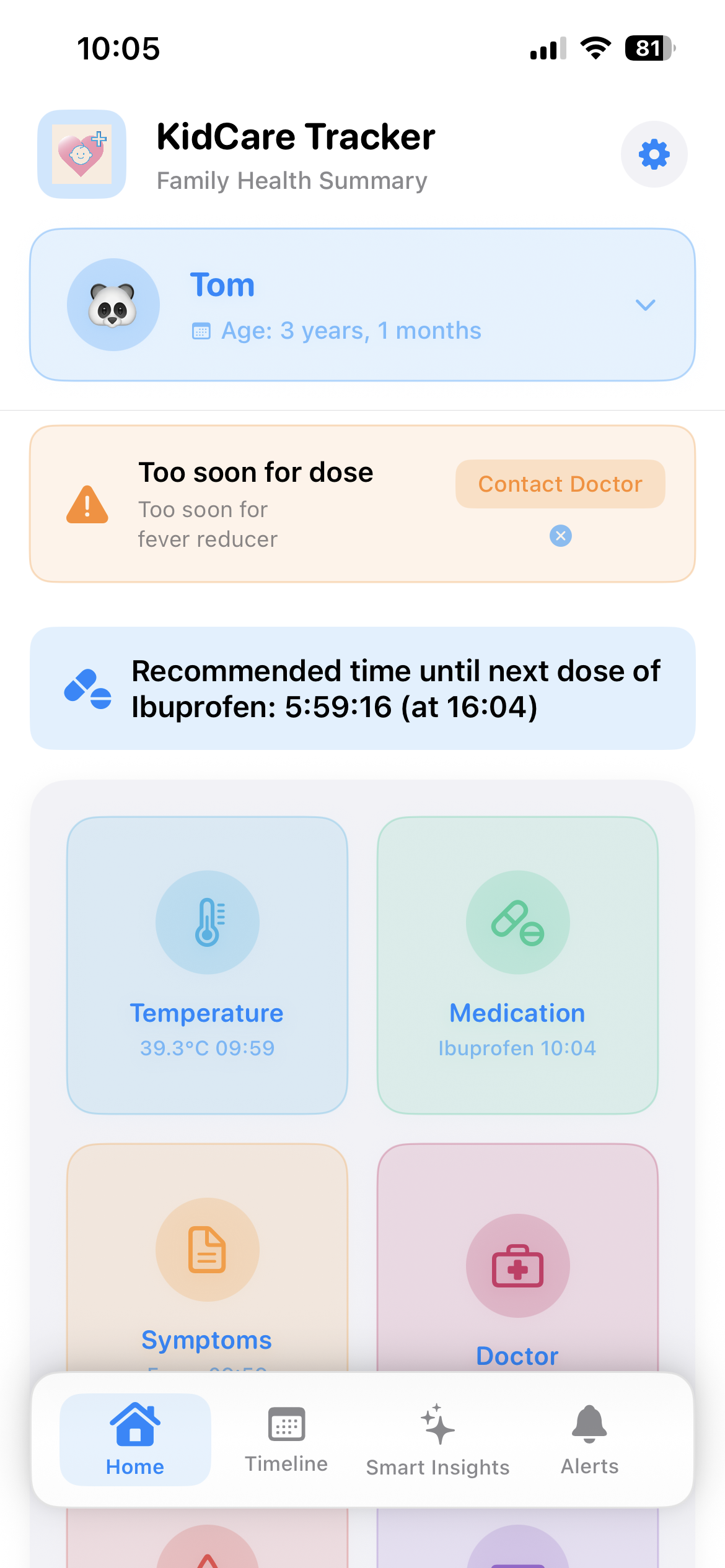
After you've given a dose (using your doctor's or label's guidance), record it in KidCare Tracker. You'll have a full history of when and what you gave—especially useful during multi-day illness or when more than one caregiver is involved.
Download KidCare TrackerWatch a short demo of logging a medicine dose in KidCare Tracker so you never lose track of when you gave ibuprofen.
What is the correct ibuprofen dose for children?
Pediatric guidelines often recommend ibuprofen at 5–10 mg per kilogram of body weight per dose, usually given every 6–8 hours as directed. The exact dose depends on your child's weight, age, and the product. Always follow your doctor's or pharmacist's advice and the medicine label.
How often can children take ibuprofen?
Ibuprofen is typically given every 6–8 hours, with a maximum number of doses per day depending on the product and your child's age and weight. Only a healthcare professional or the medicine label can give you the correct schedule. Do not exceed the recommended frequency.
Should ibuprofen dosage be based on weight?
Yes. Weight-based dosing is the standard for ibuprofen in children because children of the same age can have very different body weights. Many product labels and doctors use mg per kg. Always confirm the exact dose with your child's doctor or the product leaflet.
Can ibuprofen help reduce fever in children?
Yes. Ibuprofen is commonly used to reduce fever and relieve pain in children when recommended by a doctor or according to the product label. It does not treat the cause of the fever. Always follow your doctor's advice and the medicine's instructions.
Is ibuprofen safe for babies and toddlers?
Ibuprofen is not suitable for all ages. Many products are only for children above a certain age (e.g. 6 months or older). Always check the product label and your doctor's guidance. Never give ibuprofen to a baby or toddler without medical advice.
Use KidCare Tracker to log each dose and keep a clear medication history.
Download KidCare TrackerThis page is for educational purposes only and does not constitute medical advice. Dosage information is based on commonly referenced pediatric guidelines. Always follow the advice of your child's doctor or pharmacist and the instructions on the medicine's packaging.
This page is reviewed periodically for accuracy. Last reviewed: March 2026.
Further reading (external):