
Track both medications in one timeline
Record paracetamol and ibuprofen in the same app so you see when each was given.
Understand the difference between paracetamol and ibuprofen and learn how to safely track medication for your child.
Track Medication With KidCare Tracker
Disclaimer: This page is for information only. It does not provide medical advice. Always follow guidance from your healthcare professional.
| Feature | Paracetamol | Ibuprofen |
|---|---|---|
| Purpose | Reduces fever, relieves pain | Reduces fever, relieves pain |
| Reduces fever | Yes | Yes |
| Pain relief | Yes | Yes |
| Anti-inflammatory effect | No | Yes |
| Typical dose interval | Often every 4–6 hours | Often every 6–8 hours |
| Common forms | Syrup, tablets, suppositories | Syrup, tablets |
The following is a general overview. Only your doctor or the product label can tell you what is right for your child.
Always check the product label for age limits and dosing. Some children should not take one or both medicines—your doctor can advise.
Record paracetamol and ibuprofen in the same app so you see when each was given.
Log each dose with amount and time so you never rely on memory alone.
Check the app before the next dose to keep to safe intervals.
Build a history you can share with your doctor or use when alternating medicines under medical advice.
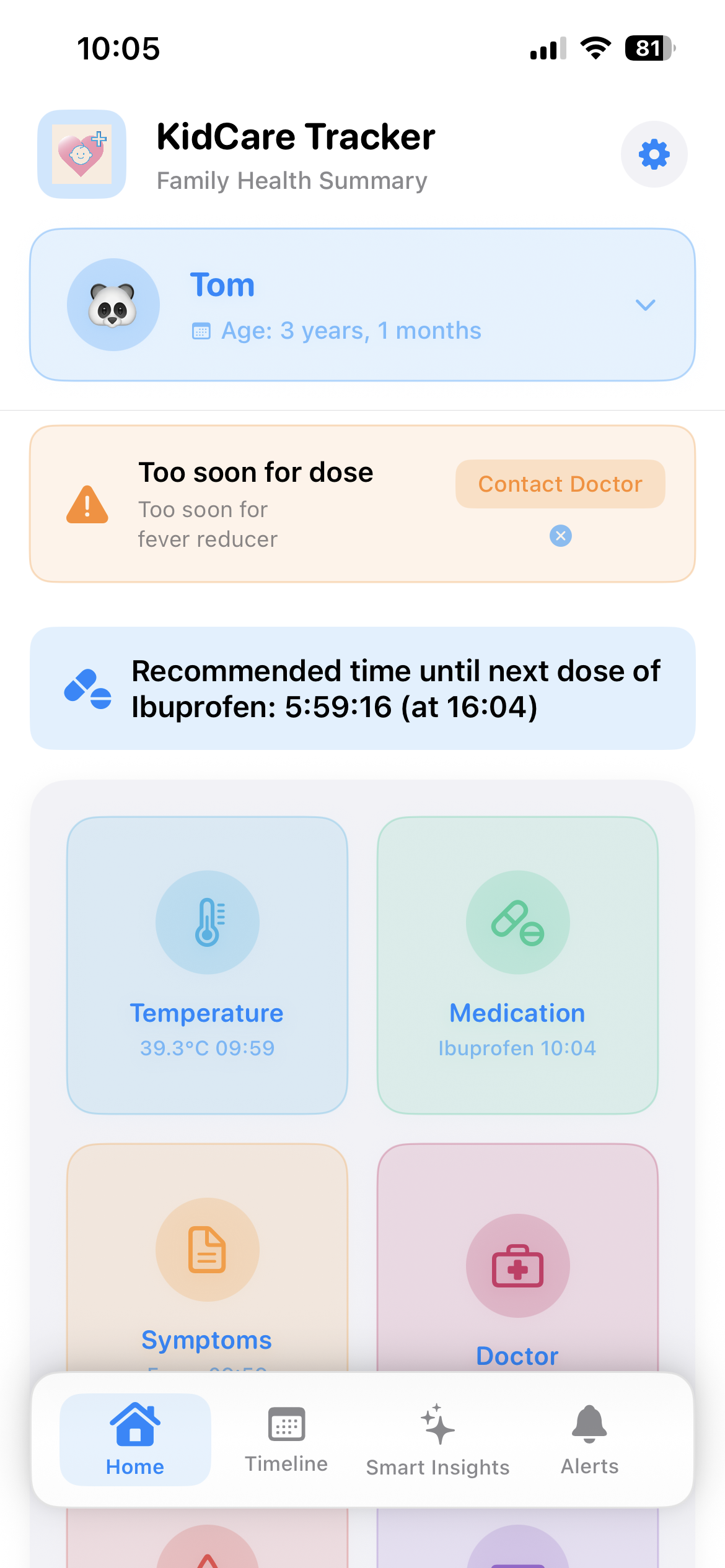
Whether you use paracetamol, ibuprofen, or both (only if your doctor has advised it), KidCare Tracker helps you track timing and doses in one place.
Download KidCare TrackerWatch a short demo of logging medicine doses in KidCare Tracker so you can safely track paracetamol and ibuprofen.
What is the difference between paracetamol and ibuprofen?
Paracetamol reduces fever and pain. Ibuprofen also reduces fever and pain and has an anti-inflammatory effect. Both are commonly used in children when recommended by a doctor or according to the product label. The right choice depends on your child's age, condition, and medical advice.
Which medicine is better for fever in children?
Both paracetamol and ibuprofen can be used to reduce fever in children when appropriate. Which one to use, and whether to use them at all, should be decided by your child's doctor or according to the product instructions. This page does not recommend one over the other.
Can paracetamol and ibuprofen be taken together?
Some doctors may suggest alternating or using both under strict timing rules. This should only be done on the advice of a healthcare professional. Never combine or alternate medicines without medical guidance. KidCare Tracker can help you record when each medicine was given so you can follow your doctor's instructions safely.
How often can children take paracetamol or ibuprofen?
Dosing intervals differ. Paracetamol is often given every 4–6 hours; ibuprofen every 6–8 hours, depending on the product. Always follow the medicine label and your doctor's or pharmacist's advice. Do not exceed the recommended frequency or daily dose.
When should I call a doctor for a child's fever?
Call a doctor if your child is very young (e.g. under 3 months), has a high fever, seems very unwell, has a rash, difficulty breathing, or if you are worried. This page is not medical advice. Always follow your healthcare provider's guidance.
Use KidCare Tracker to log each dose and keep a clear medication history.
Download KidCare TrackerThis page is for educational purposes only and does not constitute medical advice. The comparison is based on commonly referenced pediatric guidelines. Always follow the advice of your child's doctor or pharmacist and the instructions on the medicine's packaging.
This page is reviewed periodically for accuracy. Last reviewed: March 2026.
Further reading (external):